
India's 150 million internal labour migrants power the national economy — yet remain structurally excluded from every system meant to protect them. This paper proposes the institutional fix.
The Invisible Workforce: Making the Case for a National Resource Center for Migrant Workers
India’s internal migrant workforce — estimated at 150 million workers and roughly 30 percent of the total workforce — forms an indispensable but structurally invisible layer of the national economy.
These workers drive output across construction, agriculture, textiles, and domestic services, yet remain among the most excluded groups in the country: unable to port social protection across state lines, largely unprotected by labour law in practice, and absent from the official data systems that would allow the state to count, locate, or support them.
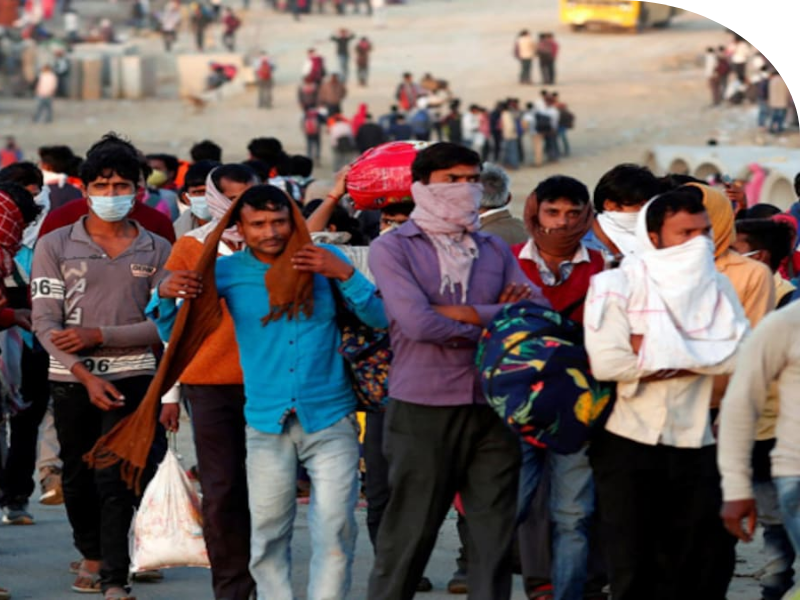
COVID-19 made this institutional failure catastrophic and visible — when an estimated 11–12 million workers were forced to walk home in 2020, the state had no mechanism to reach them.
-
This paper proposes a National Resource Centre (NRC) as a structured institutional interface — not a new government department, but a coordination architecture built on a Hub and Spoke model with a national hub, state-level nodes, and district-level satellite centres along high-migration corridors.
Drawing on sub-national proof of concept from Odisha and Tamil Nadu and international models from Finland and Germany, the NRC is built around four functional pillars:
Building the national data infrastructure that currently doesn’t exist,
Actively linking workers to social protection and welfare schemes,
Providing legal literacy and grievance redress,
and Creating pathways from informal to certified employment.
India does not lack policy intent on migrant welfare — it lacks the institutional mechanism to translate that intent into consistent, scalable action.