Uncategorized

Eri Silk Village Heritage

Field Reflections from the field: Exploring EV Pathways in Rural Maharashtra

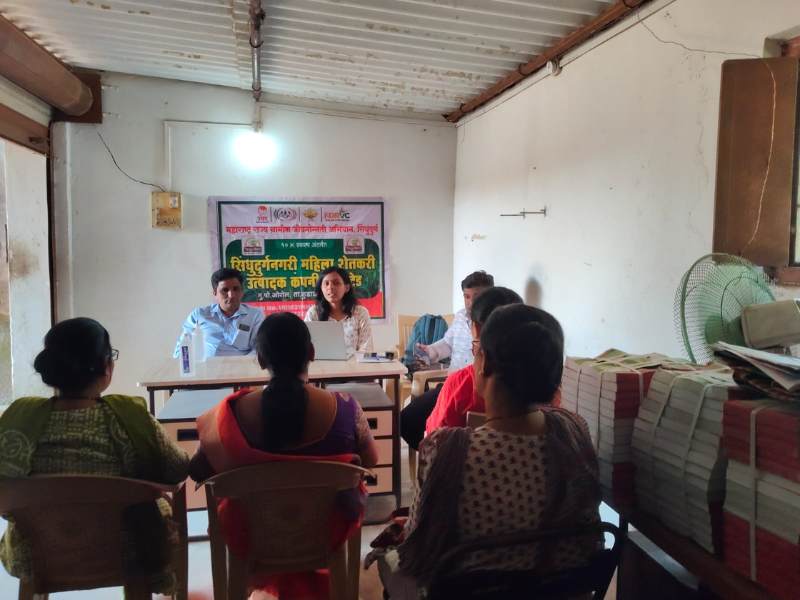
Author: Snehal Yadav (Founders Office Associate, Special Projects) December 13, 2025 Over the past weeks, Snehal Yadav and Avinash Dikhale traversed the villages of Sindhudurgh and Nashik, as part of the Harit Vriddhi Project’s expanding outreach across Maharashtra. Their mission was clear: to understand community readiness for electric vehicles and to explore the intersection of sustainable mobility with rural livelihoods. What emerged from these conversations was a landscape of untapped potential. While traditional approaches to rural development often overlook emerging technologies, the communities demonstrated a distinct openness to exploring alternatives. Farmers and community members expressed keen interest in understanding how EV solutions could address their mobility challenges and complement their existing livelihood activities.”On-ground outreach conducted across Sindhudurgh and Nashik under the Harit Vriddhi Project”The meetings revealed a critical insight: rural communities are not waiting passively for change. Instead, they are actively seeking pathways to adopt technologies that promise practical benefits—whether through reduced operational costs, improved accessibility to markets, or diversified income opportunities. Through these interactions, one central truth surfaced: communities are ready to shift, but they require enabling systems. The groundwork has reinforced what is becoming increasingly evident across the Harit Vriddhi initiative—that sustainable mobility transitions are not merely technological challenges, but deeply rooted social and economic imperatives that demand integrated solutions. As efforts to scale EV awareness continue across Maharashtra and beyond, the foundation laid in villages like Sindhudurgh and Eklahare serves as a reminder that innovation thrives when communities are heard, supported, and empowered to lead their own transformation.”Communities don’t resist change—they anticipate it.”

Field Reflections from the field: Exploring EV Pathways in Rural Maharashtra Read More »

Eri Silk Village Heritage

Threads of Tradition: A Journey to the Eri Silk Village

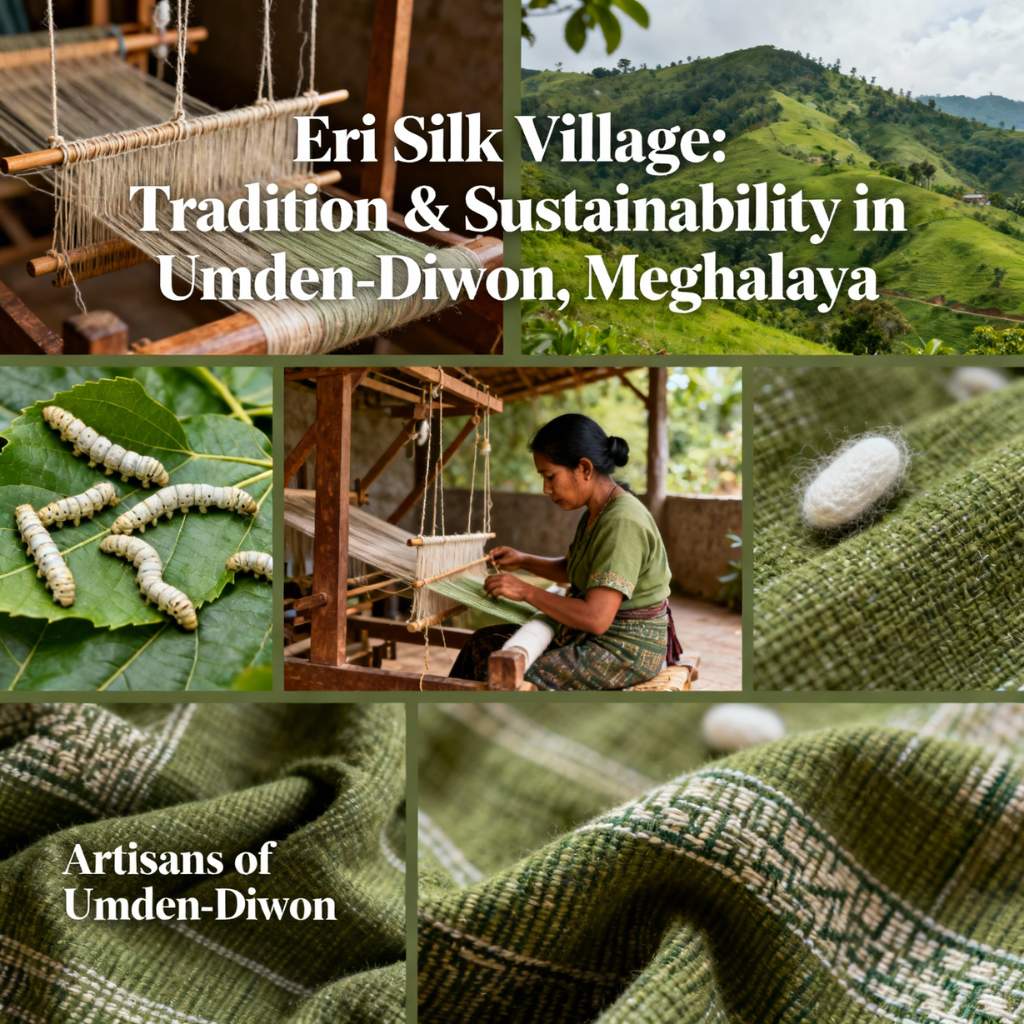
Author: Rima Boruah (Project Executive) Oct 30, 2025 What if every thread you wore told a story — not just of beauty, but of compassion and coexistence? As a Project Executive at Socion Impact , working closely with MSRLS and the vibrant communities of Umden-Nongtluh, Jowe, and Korstep-Nongtluh in Ri-Bhoi, I’ve learned that true impact begins with understanding people — their needs, their culture, and their quiet strength. My journeys often take me deep into the heart of Meghalaya, where traditions breathe through everyday life. Among all the places I’ve visited, Umden-Diwon stands out like a hidden jewel — a village that weaves not only silk, but also hope.“In Umden, silk isn’t made — it’s born, with care and conscience.”Nestled amid lush green hills, Umden-Diwon is lovingly known as the “Eri Silk Village.” Here, silk isn’t merely a fabric — it’s a story of compassion, it’s a story of harmony with nature. The villagers follow an age-old, eco-friendly process of producing Eri silk without harming the silkworms — a rare symbol of coexistence and compassion in craftsmanship. For generations, the women and men here have nurtured this sustainable art, spinning threads of resilience despite limited electricity and poor market access. “Every loom, every fibre carries the warmth of their tradition and the pride of self-reliance.” These are communities that don’t just weave silk — they weave stories of strength, sustainability, and soul. With the right support and opportunities, their golden threads of tradition can continue to shine, empowering generations to come. “In every woven strand lies the heartbeat of a community that believes in balance, beauty, and belonging.”   

Threads of Tradition: A Journey to the Eri Silk Village Read More »

From SHGs to Startups: Enabling Women Through CSR and Entrepreneurship  

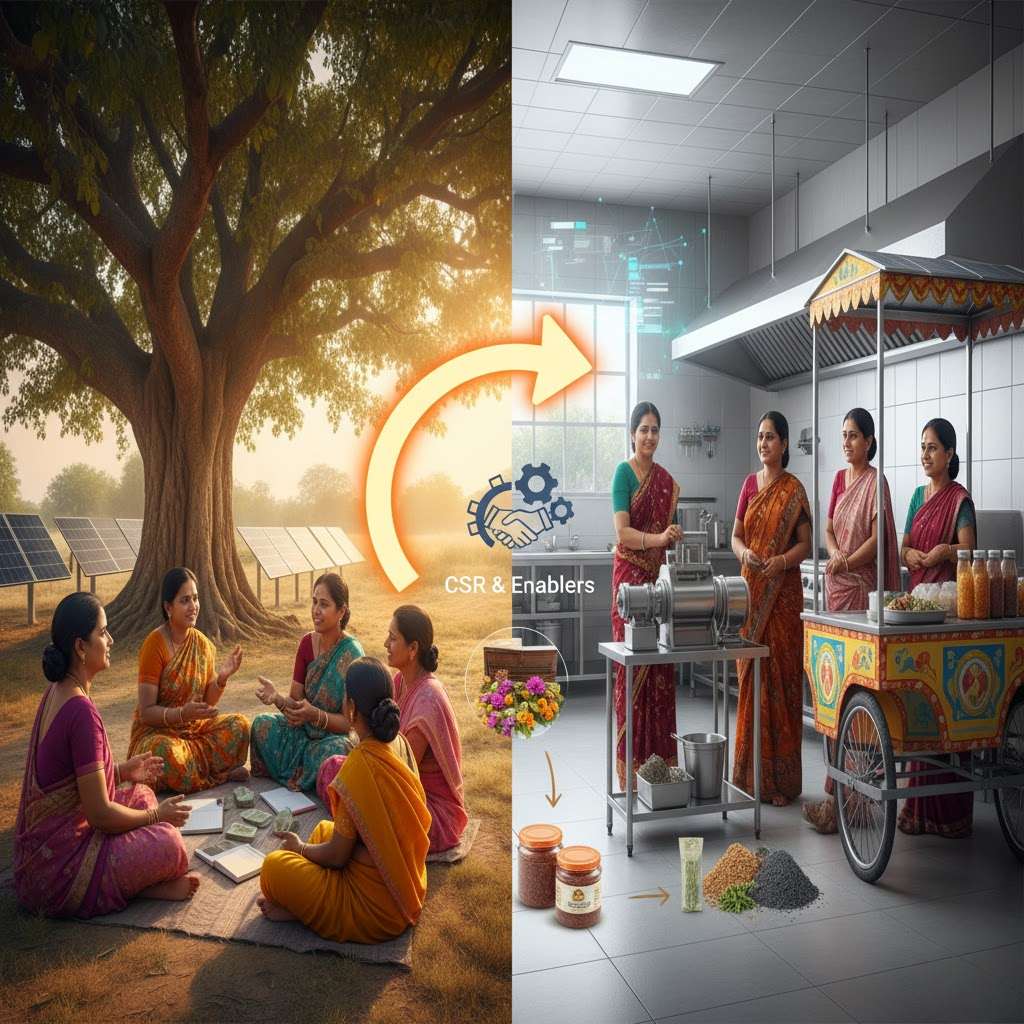
Author: Sunanda Shivhare (Director – Finance & Strategic Partnerships) Oct 14, 2025 In the evolving landscape of rural India, Self-Help Groups (SHGs) have long served as a vital foundation for financial inclusion and community-led growth. Now, a new chapter is unfolding—one that sees SHG members transforming into entrepreneurs and startup founders, thanks to sustained support through Corporate Social Responsibility (CSR) projects and ecosystem enablers. This journey—from grassroots collectives to independent business ventures—illuminates the power of women-led transformation across rural and semi-urban sectors.   The Role of SHGs: Financial Backbone and Incubator Microfinance through SHGs is far more than just lending—it’s a conduit for empowerment. Various studies have highlighted how microfinance and entrepreneurial engagement via SHGs led to greater financial autonomy, decision-making capacity, broader social networks, and improved psychological well-being among rural women. Key Impact: SHGs function as accessible gateways to credit and savings for women who typically face barriers in accessing formal banking—without collateral, and often landless. In practice, SHGs function as accessible gateways to credit and savings for women who typically face barriers in accessing formal banking—without collateral, and often landless. They also foster a strong sense of collective responsibility. A CSR-backed support to set up a mustard oil expeller unit, in just a few months, can generate good revenue, transforming members’ lives and sparking entrepreneurial interest among nearby groups. CSR: The Catalyst From Groups to Growth CSR initiatives are playing a pivotal role in enabling SHGs to scale from collection-based entities toward actual businesses: Comprehensive Support The mustard oil startup received not just finance, but training, market strategy guidance, and institutional linkages—along with community infrastructure support from Panchayats. Ecosystem Partnerships Government agencies, NGOs, research institutions, and local governing bodies often collaborate, offering technical, regulatory, and promotional backing to these SHG-turned-enterprises. Scaling Impact: From Markets to Mobility The SHG-to-startup model is gaining widespread traction: Women’s SHGs are converting floral waste into products like gulkand, incense, dyes, and fresheners—blending sustainability with income generation. Supported through CSR, SHG women are running mobile cafes—shaping entrepreneurial identity and economic independence. SHG women bypass middlemen by selling directly to consumers—the initiative has boosted financial contribution and confidence among members. Emerging Ecosystems: Incubators and Institutional Support Two standout models exemplify structured transition from SHG to startup: Swayam Shikshan Prayog (SSP) 📍 Pune350,000+Women Supported Women-Led Climate Resilient Farming model and entrepreneurship programs focus on building agency and resilient income sources in areas like clean energy, agriculture, and nutrition. Enabling Women of Kamand (EWOK) 📍 IIT Mandi 12+ Startups Incubated 60+ Women Empowered Incubated by IIT Mandi, EWOK trains rural women in entrepreneurship—operating village-scale ventures and linking them to markets. To date, EWOK has incubated over 12 startups, directly empowering more than 60 women. Impact and Narratives Empowerment Beyond Income: According to a World Economic Forum report, Women in SSP’s programs have reported increased financial autonomy and improved decision-making capacity. Scaling Aspirations: Initiatives like ‘Lakhpati Didi’ have enabled women to achieve sustainable livelihoods, fostering a culture of entrepreneurship. Environmental and Social ROI: Projects converting waste into products not only generate income but also contribute to environmental sustainability. Institutional Fortification: Partnerships with institutions like NABARD and IIT Mandi strengthen the capacity of SHGs to operate as viable businesses. Looking Ahead: Scaling What Works To reinforce this transition from SHGs to startups, a multi-pronged strategy is essential: Expand SHG-based Startups: Leverage local resources (e.g., agriculture, waste) for diverse, scalable enterprises. Digital & Market Connectivity: Integrate e-commerce, mobile tools, and local market linkages to broaden reach. Structured Training: Focus on financial literacy, branding, digital tools, and managerial skills. Create Ecosystems: Build mentorship networks and access investor channels, aligning SHG entrepreneurial pathways with broader policy frameworks like Stand-Up India or Startup India. Measure & Share Impact: Regularly assess and communicate the outcomes of SHG-based startups to attract further support and investment. Empowering SHG women to become entrepreneurs isn’t just a gender equity imperative—it’s a scalable pathway to rural prosperity. When CSR, community structures, and institutional networks come together, SHGs emerge not just as savings groups, but as startups with a social mission. At Socion Impact, we envision a future where thousands of such stories redefine rural entrepreneurship and collective resilience. “At Socion Impact, we envision a future where thousands of such stories redefine rural entrepreneurship and collective resilience.”

From SHGs to Startups: Enabling Women Through CSR and Entrepreneurship   Read More »

A Thousand Faces, A Thousand Dreams

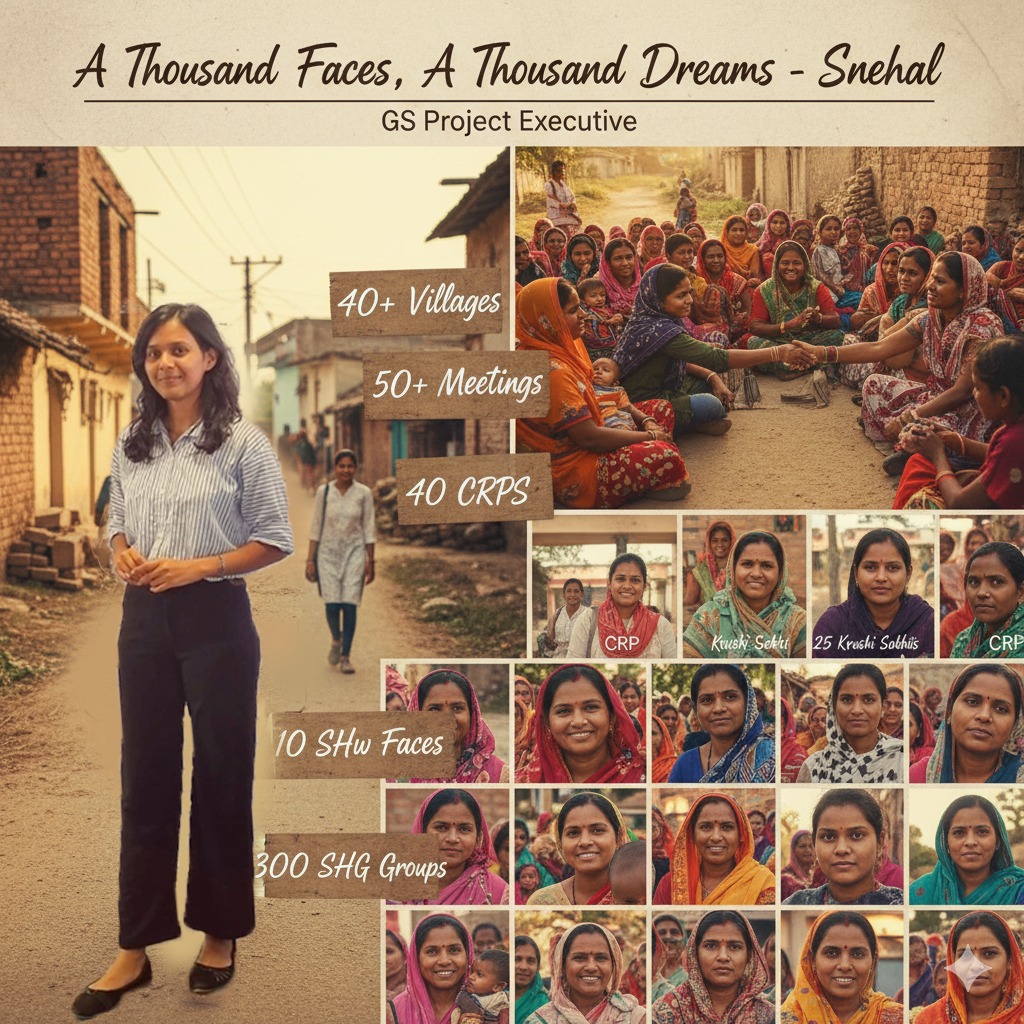
Author: Snehal Yadav (Project Executive) Sep 25, 2025 Three months into my role as Project Executive at Socion Impact, and it already feels like I’ve lived a hundred different lives. In just three months, I walked into more than 40 new villages, sat through 50+ grassroots meetings, connected 40 CRPs with 25 Krushi Sakhis, and reached nearly 1,000 new faces through 300 SHG groups. Sounds like a lot, right? But trust me – numbers don’t tell the real story. What I saw, what I felt – that’s something no report can capture. Picture this: dusty village lanes, a group of women sitting in a circle, some with infants on their lap, some with calloused hands from the fields… and yet, when the meeting begins, the air changes. The CRPs – oh, their spirit is electric! The way they stand tall, lead discussions, and pour energy into every word – it gave me goosebumps. These are not just workers; they are warriors carrying an entire community on their shoulders. And the SHG women? Wah! What can I say – leaders in their own right. Most of them studied only till primary school, some not even that. But the way they manage group finances, take collective decisions, and guide each other… you’d never believe they had “less education.” Their confidence, their wisdom – it’s humbling. I kept thinking: this is the real India shining. But the most emotional moment came when I heard their dreams. Almost every woman I met had the same fire in her eyes: “आम्हालाही काहीतरी करायचं आहे. मशीन घ्यायचं आहे, स्वतःचं काम सुरू करायचं आहे… आम्हीही उद्योजक बनू..” (We want to do something. We want to buy machines, start our own work, become entrepreneurs.) I can’t forget those eyes. So full of determination, yet held back by one thing – money. Finance. Such a small word, but such a big barrier. Their willpower is unshakable, their dreams unstoppable — but without that tiny push, they remain dreams. And that’s what hurt me the most. That’s where we step in. Through the PMFME scheme, we help these women unlock a 35% credit-linked subsidy to start their micro-enterprises. And with SELCO Foundation’s support, they can also access subsidies on solar-powered, decentralized renewable energy (DRE) machines – making their businesses more sustainable, reliable, and independent of erratic electricity. And then I thought… India has set these big goals: energy independence by 2047, net zero emissions by 2070. But standing in that circle of women, I realized – the real power lies here. If we channel their energy, if we bring DRE solutions into their hands, these women won’t just change their lives – they’ll change India’s future. When I look back at these visits, I don’t remember the kilometers traveled or the number of meetings. What I remember are the faces — faces that said without words: “We are ready. Just give us the chance.” And I keep asking myself — if these women, with so little, can dream so big… then what’s stopping the rest of us?

A Thousand Faces, A Thousand Dreams Read More »